Notes on Leather
Grain density, dual wax conditioning, and why temper defines how footwear feels on bare skin.
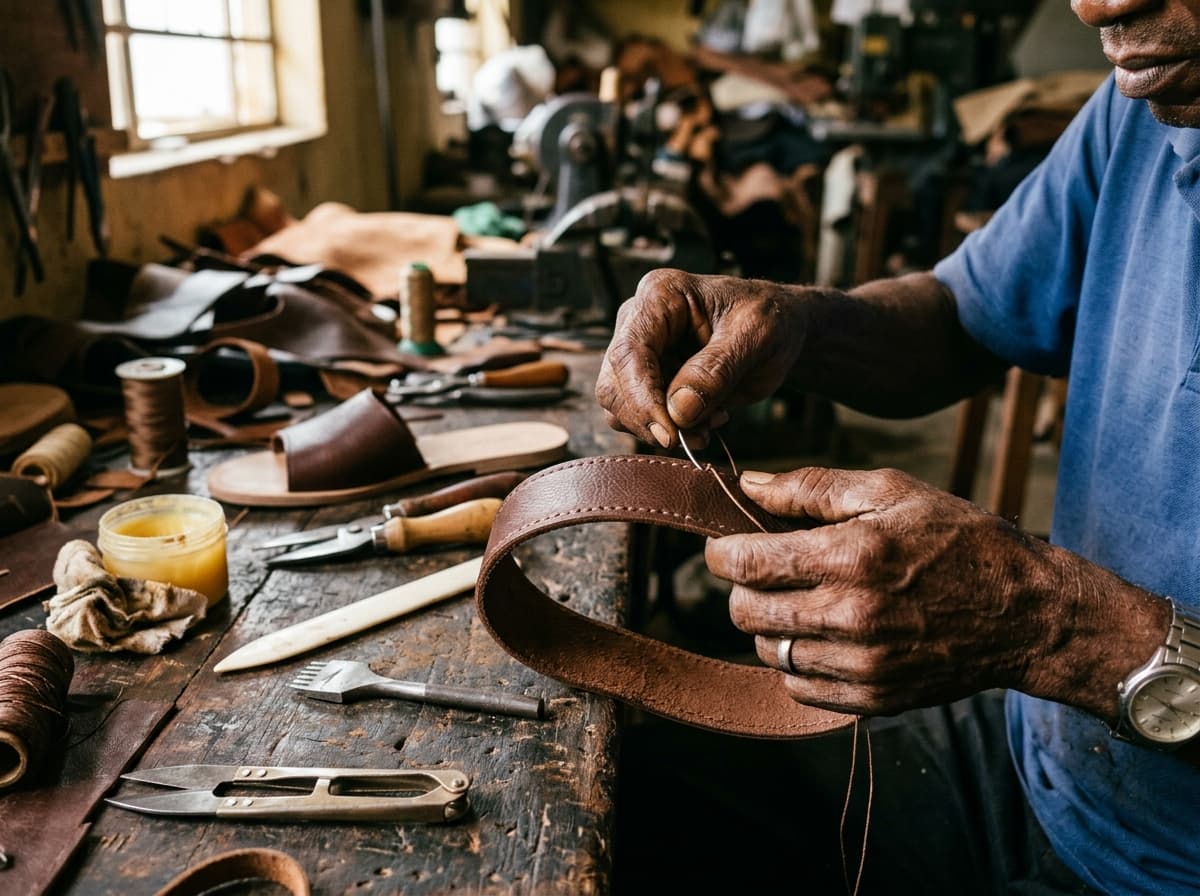
In shoemaking, “temper” refers to the balance of pliability and firmness in a hide. A strap that is too stiff bites the top of your foot; one that is too soft stretches out of shape within weeks.
For Drop 001, we selected full-grain calfskin hides with uniform tensile strength. Before cutting, each hide is conditioned with natural beeswax and oils, allowing the fibers to relax while preserving their structural memory.
“Leather is not a static material; it is a responsive medium that records the story of how you move.”
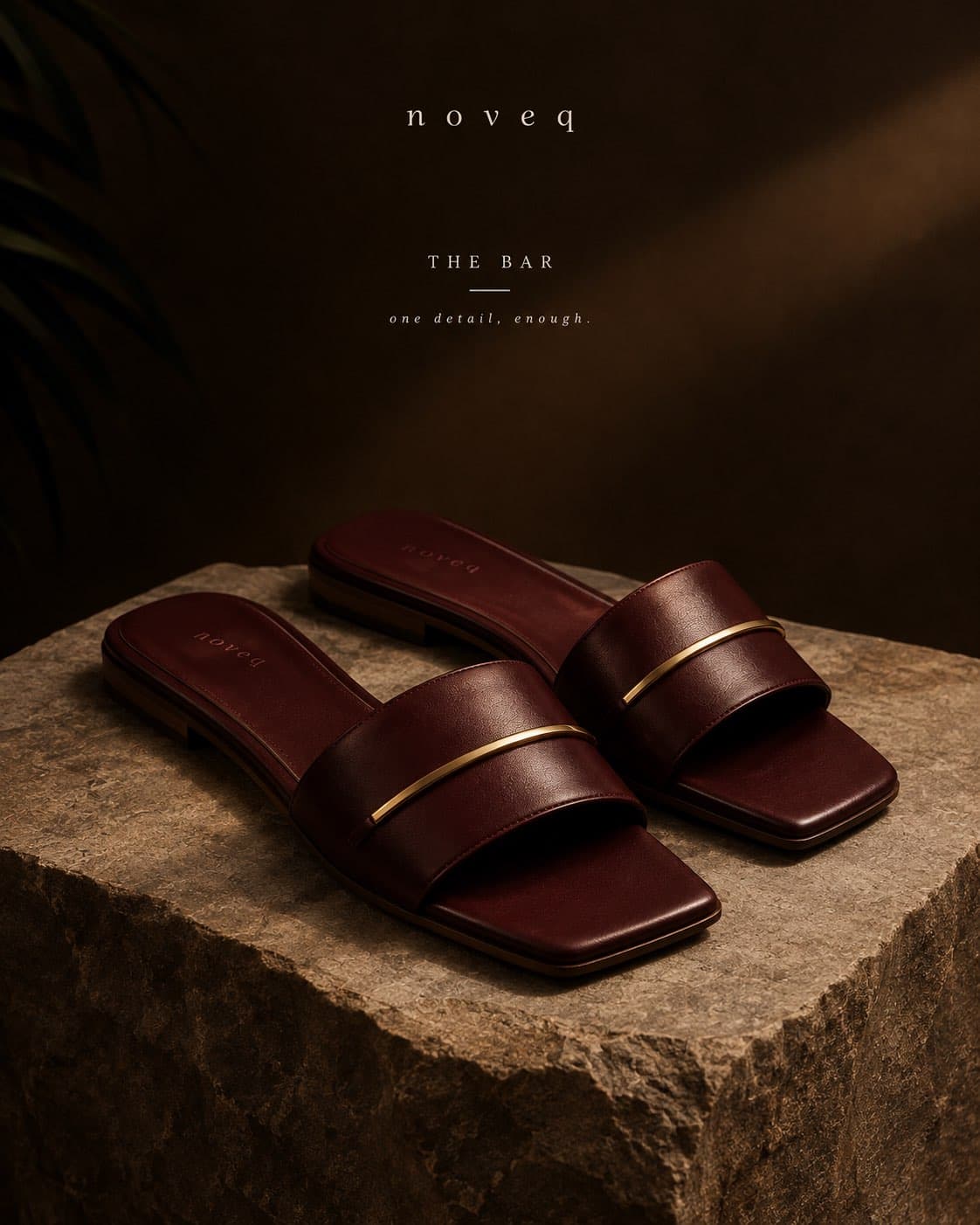
One critical step often skipped in modern commercial footwear is edge beveling. We shave the bottom corners of every strap at a gentle 45-degree angle before hand-burnishing the raw edge. When you slip your foot in barefoot, there are no sharp leather edges — only a smooth, supple boundary.
With proper care — a simple wipe-down after wear and periodic light conditioning — this leather does not degrade. It deepens in character, forming a gentle patina unique to the way you walk.